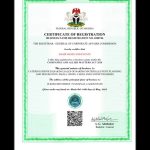
Most articles on this topic tell you why registration matters in broad strokes and stop there. This one goes further actual documents, actual costs, actual timelines, and the actual steps involved, so you know exactly what you’re walking into before you start or before you hire someone to handle it for you.
1. CAC Registration
Business Name vs. Limited Liability Company
| Business Name | Limited Liability Company | |
|---|---|---|
| Legal status | No separate legal identity — you are personally liable | Separate legal entity — liability limited to the company |
| Minimum owners | 1 proprietor (or 2+ for a partnership) | 1–50 directors/shareholders |
| Minimum share capital | Not applicable | ₦100,000 minimum |
| Statutory filing fee | ₦10,000 | Starts around ₦60,000 (for ₦1,000,000 share capital, scaling up from there) |
| Processing time | 3–5 working days | 3–7 working days |
| Best for | Freelancers, sole traders, small partnerships | Startups seeking investment, businesses wanting liability protection, anyone planning to scale, export, or bid for contracts |
Documents you’ll need
- A valid government-issued ID for each proprietor/director (International Passport, NIN slip, or Driver’s License) — must be a clear, color scan
- Passport photograph
- A verifiable physical business address
- Proposed business/company name (plus one or two backup options, in case your first choice is rejected or already taken)
- For a company: Memorandum & Articles of Association (this is also where you state your business objects — important later if you plan to export, see Section 4)
- Digital signature of the proprietor/director
The actual process
- Name availability search and reservation on the CAC’s online portal (a small reservation fee applies, roughly ₦500). Reserved names are typically held for 60 days.
- Complete the registration form online, entering proprietor/director details, business address, and objects.
- Upload documents (ID, passport photo, signature).
- Pay the statutory fee via the portal’s integrated payment gateway.
- Wait for review. A CAC registrar checks the application; if anything is inconsistent between your form and your documents, you’ll receive a “query” that must be resolved before approval.
- Download your certificate. Once approved, your Certificate of Registration/Incorporation and Certified True Copy are available directly from the portal — no physical CAC office visit required.
Practical tip: the single biggest cause of delay is mismatched information — e.g., a name on your ID that doesn’t exactly match the name entered on the form, or a black-and-white ID scan (CAC frequently rejects these). Getting the details right the first time is the difference between a 3-day approval and a multi-week back-and-forth.
2. Filing Annual Returns
This is the obligation most business owners forget about — and the one that quietly does the most damage.
What it actually is
An annual return is not a tax filing. It’s a yearly statement to the CAC confirming your business is still operating and that your registered details (address, directors/proprietors, share structure) are still accurate. It’s filed separately from — but around the same time as — your FIRS Company Income Tax filing.
Deadlines and costs
- For businesses with a 31 December financial year-end, annual returns are typically due by 30 June of the following year.
- Filing fees are modest on their own — roughly ₦10,000/year for companies and around ₦3,000–₦5,000/year for business names — but penalties are where it adds up.
- Late penalties apply per year of default, roughly ₦5,000/year against the company plus ₦1,000/year per director, on top of the base filing fee. Since enforcement tightened from January 2024, these penalties are actively applied — not just theoretical.
- If you’ve missed multiple years, you don’t pay one lump penalty — you pay a separate penalty calculation for every single overdue year, plus that year’s filing fee. Three years of arrears can easily cost several times more than staying current would have.
What happens if you ignore it
- Your business can be struck off the CAC register entirely — after which your business name becomes available for anyone else, including competitors, to register.
- Directors become personally liable for accumulated penalties, not just the business.
- Banks increasingly check CAC status before approving loans or renewing facilities — an “inactive” status can freeze access to banking services.
- You cannot change directors, increase share capital, or upgrade from a business name to a company while returns are outstanding.
How to file
- Log in to the CAC portal (cac.gov.ng) and select “Annual Returns.”
- Choose the specific year(s) you’re filing for — the portal allows back-filing for prior years.
- Confirm/update your business details (directors, address, share capital, etc.).
- Review the total payable — filing fee plus any accumulated penalties — before confirming payment.
- Pay via the portal’s gateway or Remita.
- Download and keep your filing acknowledgment — you may need it later for a Tax Clearance Certificate, loan application, or government contract.
Practical tip: treat this as a fixed calendar item, not a task you get to when you remember. If you’re behind on multiple years, address it before the next deadline rolls around and adds another year to the pile.
3. Trademark Registration
CAC registration protects your right to operate under a name. It does not stop a competitor from using a similar name or logo for their own products — that protection only comes from a registered trademark, filed through the Nigerian Intellectual Property Office (NIPO — formerly the Trademarks, Patents and Designs Registry).
Costs (realistic range)
- Government/NIPO fees alone: roughly ₦15,500–₦60,000 per class, depending on filing type, plus a Trademark Journal publication fee of around ₦50,000 per class.
- All-in cost using an agent/consultant (search, filing, publication, certificate): typically ₦150,000–₦350,000 for one class, and proportionally more for each additional class you register in.
- DIY cost (if you file yourself without an agent): can be as low as ₦55,000–₦60,000, but the risk of wrong classification or rejected applications — which forfeits your fees — is much higher without professional guidance.
- Renewal: every 7 years, roughly ₦40,000.
The actual process and timeline
- Trademark search (1–3 days) — confirms your proposed name/logo isn’t already registered or too similar to an existing mark.
- Classification — Nigeria uses the Nice Classification system with 45 classes (1–34 for goods, 35–45 for services). Your mark is only protected within the class(es) you register under, so choosing the right class matters.
- Filing (same day) — application submitted via an agent’s portal on the Trademark Registry system; you receive an official acknowledgment with a filing number and date.
- Examination (3–6 months) — officers assess whether the mark is distinctive enough (not merely descriptive, not offensive, not confusingly similar to an existing mark).
- Publication (1–2 months) — if accepted, your mark is published in the Trademark Journal.
- Opposition period (2 months) — anyone can formally object during this window.
- Certificate issuance (1–2 months) — if no objection succeeds, you pay the registration fee and receive your certificate.
Total realistic timeline: roughly 8–12 months from filing to certificate if uncontested; considerably longer — sometimes years — if an objection is raised.
Practical tip: the biggest mistake we see is business owners waiting until their brand is already well known to register — by which point someone else may have already filed a similar mark. File early, even before you’re a “big brand.” It’s far cheaper to protect a name early than to fight for it later.
4. Export License (NEPC Registration)
If you intend to sell physical goods outside Nigeria — agricultural produce, processed foods, fashion, crafts, manufactured goods — you need to be registered as an exporter with the Nigerian Export Promotion Council (NEPC), which handles all non-oil exports. (Crude oil and gas fall under a different regulator, the NUPRC.)
Prerequisites — have these ready before you apply
- An active CAC registration (Business Name or Limited Liability Company)
- “Export” must appear as a stated object in your CAC registration documents (e.g., “export of agricultural produce”). If your original CAC objects don’t mention export, you’ll need to amend them first — this is one of the most common reasons applications stall.
- A valid Tax Identification Number (TIN) from FIRS
- An active corporate bank account in the business’s name
- Company status report and directors’ identification documents
Costs and timeline
- NEPC registration fee: roughly ₦15,000–₦80,000, depending on category and whether you use an agent.
- Processing/approval: typically 5–10 working days once all documents are correctly submitted.
Step-by-step process
- Register/amend your CAC objects to explicitly include export activity, if not already included.
- Create an account on the NEPC e-registration portal (nepc.gov.ng/ereg/exporter).
- Complete the online application form and upload required documents (CAC certificate, TIN, company status report, directors’ IDs).
- Pay the applicable fee.
- Receive your Exporter’s Certificate once approved — this is your official “export license.”
- Open/link a domiciliary account at your bank to your NEPC number — required for receiving foreign currency payments and processing trade documentation.
- Classify your product with the correct HS (Harmonized System) code — best done with a customs broker or freight forwarder, since misclassification causes delays and penalties at the port.
- Complete an NXP Form at your bank for every individual export transaction.
- Obtain product-specific certificates as needed — SON (standards), NAFDAC (food/drugs/cosmetics), or NAQS (agricultural quality), depending on what you’re exporting.
- Engage a licensed freight forwarder for customs clearance and logistics to your destination market.
Practical tip: the single most common hold-up is Step 1 — businesses that registered with the CAC years ago, before they ever planned to export, and never updated their stated objects. Check this before you start the NEPC application, not after.
How These Four Pieces Fit Together
- CAC registration — gives you a legal identity and is the prerequisite for everything else.
- Annual returns — keeps that identity active; skip it and everything downstream (loans, contracts, upgrades, export registration) can be blocked by outstanding arrears.
- Trademark registration — protects the brand identity you build on top of your legal identity, and should start early, not after you’re already known.
- Export license (NEPC) — opens your registered, compliant, protected business to international buyers — but only works if your CAC objects explicitly cover export.
At Kanmieo Consult, we handle all four end-to-end — from initial registration, through yearly compliance filing, to trademark protection and export licensing as you scale. If you’re not sure where your business currently stands on any of these, reach out and we’ll assess it properly before it becomes an expensive problem.
This article is for general informational purposes and does not constitute legal or professional advice. Fees, deadlines, and processing times set by the CAC, NIPO, and NEPC change periodically — contact Kanmieo Consult Book Consultation for current, case-specific guidance.